


Swap SOL to AVAX instantly.


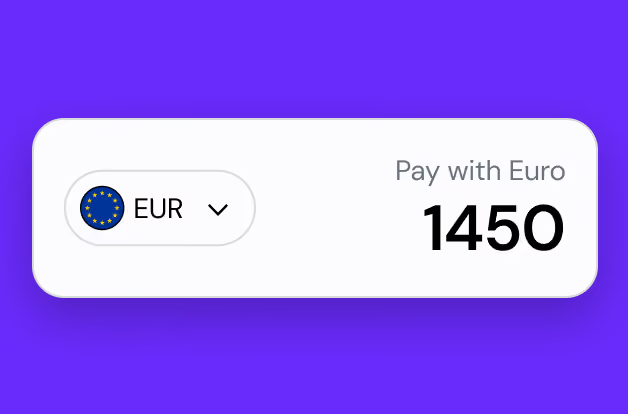
Select the assets and amount
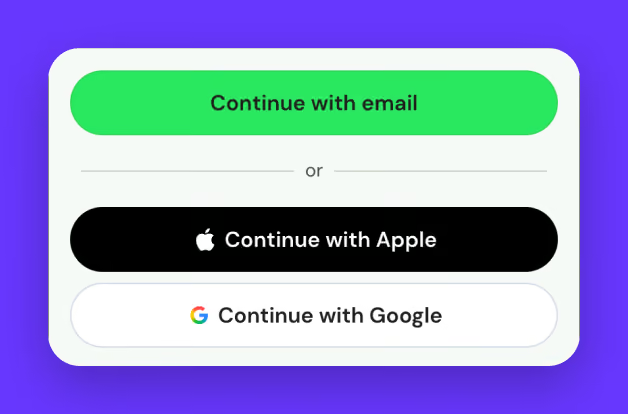
Create your account
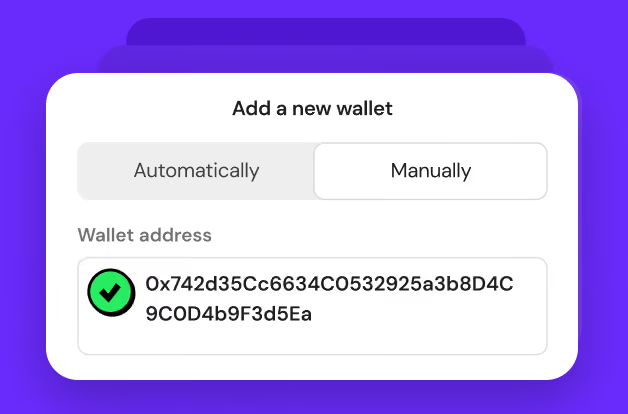
Connect your wallet
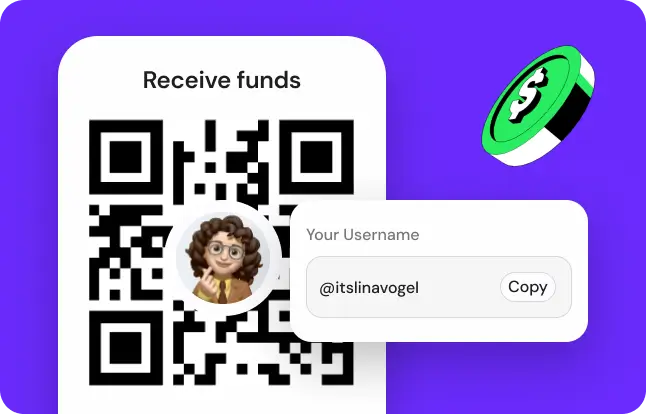
Send SOL and receive AVAX

I used the service to withdraw cryptocurrencies to a bank card. Verification was quick and easy. The commission turned out to be low, which distinguishes this service from others. The most important thing is that the money was credited to the card in just a few minutes after the transaction was confirmed.
Well designed and very efficient process that leads to fast and easy to conduct transactions. Been using this for quite some time and it has become my go-to option to convert fiat to crypto.
The crypto price and fee were absolutely fair. The purchase process was transparent, fast, and efficient. Absolutely exemplary and highly recommended.
It wasn’t as long and cumbersome as I was afraid of. It took less time, more streamlined and took less time in general to complete the transaction than with other services.
I found this excellent app very practical.
Easy to use and very efficient.
Solana popped up in 2020 with one clear goal: make crypto fast enough to actually use. The idea came from engineer Anatoly Yakovenko, who got tired of how slow most blockchains were. His fix was something called Proof of History, basically a built-in clock that keeps every transaction in order.
That small change made a big difference. Transfers on Solana take just a few seconds and cost less than a cent. Developers jumped in quickly, building NFT projects, DeFi platforms, and games that actually run in real time. The SOL token sits at the center of it all, used to cover fees, stake, and secure the network.
Of course, Solana had its rough patches, downtime, bugs, and all that, but the team kept pushing updates and improving the system. These days, it’s one of the busiest blockchains out there, handling millions of transactions daily and proving that speed really does matter in crypto.
Avalanche arrived the same year but took a slightly different route. It was built by Ava Labs to handle thousands of transactions per second without giving up security or decentralization. Instead of a single chain, it runs multiple “subnets,” each one doing its own thing but still connected under the same roof.
The AVAX token keeps the system moving, it’s used to pay fees, stake for rewards, and vote on network decisions. This setup lets developers spin up custom chains for anything from finance apps to large-scale games.
What makes Avalanche stand out is its balance: it’s fast, cheap, and surprisingly eco-friendly. Builders like it because they can move fast without worrying about traffic jams or high gas fees. It’s practical, flexible, and feels closer to how Web3 should actually work.


SECURE BY DESIGN. YOURS BY DEFAULT.


Explore other over 120 Assets
From Bitcoin and Ethereum to Solana, Cardano, and Tether, Ramp Network makes it simple for anyone to buy and start using crypto.









GET THE APP FOR HASSLE-FREE CRYPTO