




Swap BNB to SOL instantly.


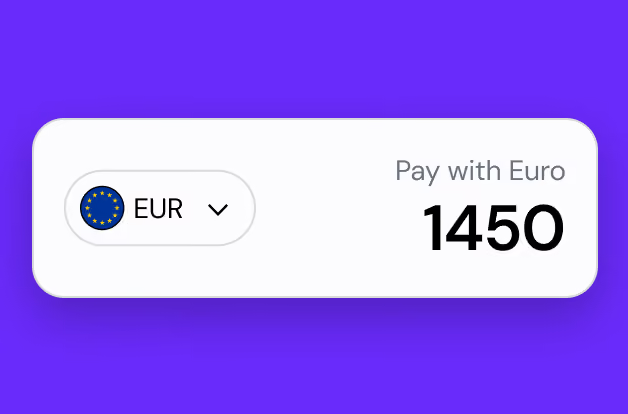
Select the assets and amount
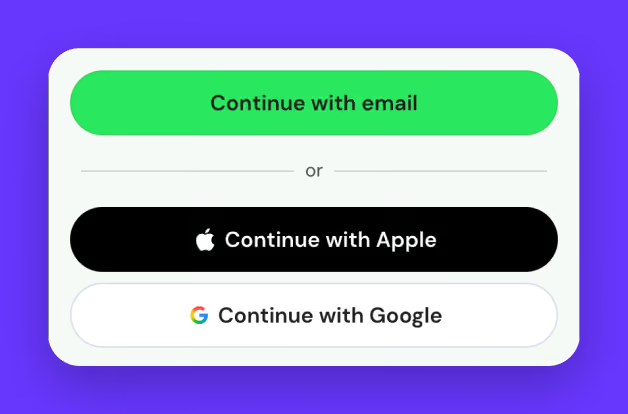
Create your account
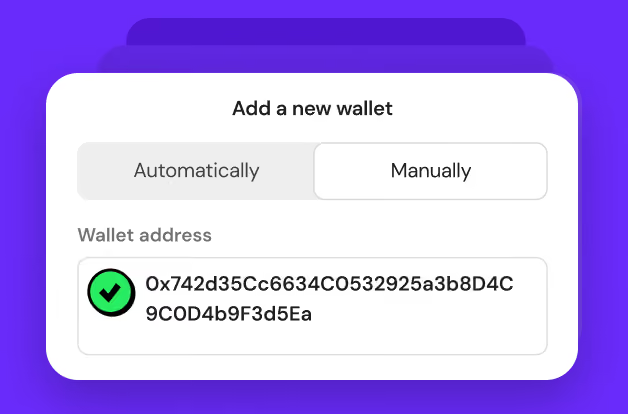
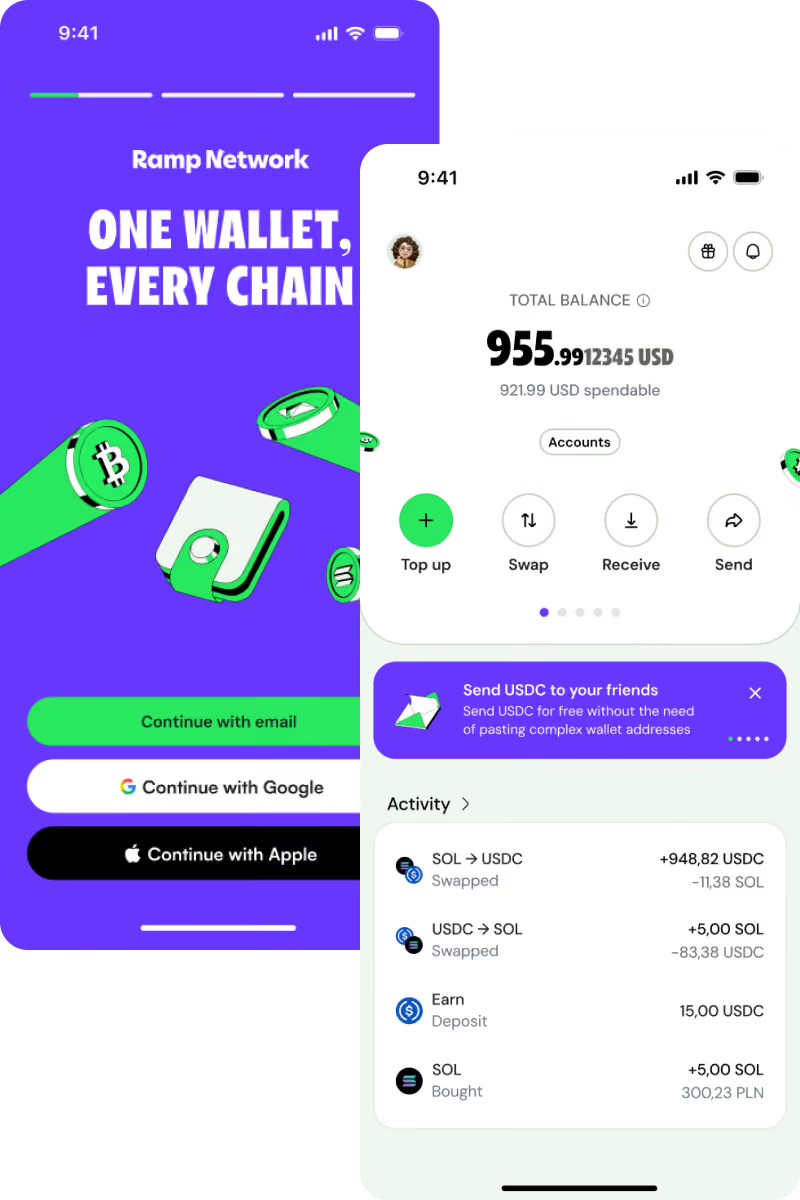
Connect your wallet
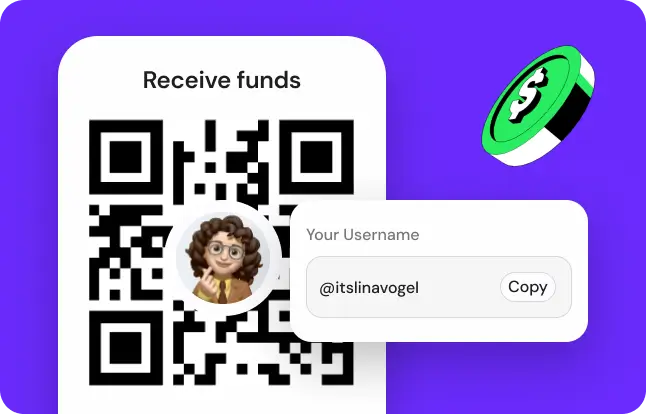
Send BNB and receive SOL

I used the service to withdraw cryptocurrencies to a bank card. Verification was quick and easy. The commission turned out to be low, which distinguishes this service from others. The most important thing is that the money was credited to the card in just a few minutes after the transaction was confirmed.
Well designed and very efficient process that leads to fast and easy to conduct transactions. Been using this for quite some time and it has become my go-to option to convert fiat to crypto.
The crypto price and fee were absolutely fair. The purchase process was transparent, fast, and efficient. Absolutely exemplary and highly recommended.
It wasn’t as long and cumbersome as I was afraid of. It took less time, more streamlined and took less time in general to complete the transaction than with other services.
I found this excellent app very practical.
Easy to use and very efficient.
BNB was introduced in 2017 as the native asset of the Binance ecosystem, originally created to give users a simple way to reduce trading fees. Since then, it has expanded far beyond its initial role. Today, BNB powers the BNB Chain, a blockchain network used for decentralized applications, payments, gaming projects, and a wide range of on-chain tools.
People use BNB to cover network fees, participate in token launches, interact with DeFi services, and move value across the BNB Chain. The network is designed to keep transactions fast and predictable, which has made it a practical choice for both developers and everyday users.
BNB also features a long-term burn mechanism that gradually reduces the total supply. This system is part of the network’s economic design and supports ongoing ecosystem sustainability.
With broad wallet and exchange support and millions of daily transactions across the BNB Chain, BNB has become one of the most widely used digital assets in the Web3 ecosystem.
Solana is a high-performance blockchain designed to support fast, low-cost transactions at scale. Since launch, it has become known for its ability to handle thousands of transactions per second while keeping fees minimal, which has made it popular among users and developers working on everything from DeFi and trading tools to NFT projects and gaming applications.
People use SOL to pay transaction fees, interact with on-chain programs, and move value across the network. Its architecture is built to keep confirmations quick even during periods of heavy activity, which helps applications stay responsive and easy to use.
Solana’s ecosystem has expanded significantly over time, with new projects, integrations, and developer tools appearing across multiple sectors of Web3. Thanks to its growing adoption and active community, SOL has become one of the most widely supported assets on wallets, exchanges, and applications.
Today, Solana plays an important role in many real-time blockchain use cases, offering a fast environment for developers and a straightforward experience for users.


SECURE BY DESIGN. YOURS BY DEFAULT.


Explore other over 120 Assets
From Bitcoin and Ethereum to Solana, Cardano, and Tether, Ramp Network makes it simple for anyone to buy and start using crypto.













GET THE APP FOR HASSLE-FREE CRYPTO